Draught round the front door, rain getting in, or a door seal that has gone hard, flat or split? A worn seal is one of the most common causes, and you can usually replace it without changing the door. We stock replacement uPVC door seals sold per metre: bubble, flipper and Q-Lon frame seals, threshold seals, and seals for patio and bifold doors, from Reddiplex, Schlegel, Stormguard and Exitex.
Door seals that look alike can have a different leg where they push into the frame, so match the shape of the cut end with your old seal. Our gasket identification guide shows every profile we stock, and our sample packs let you test the fit first.
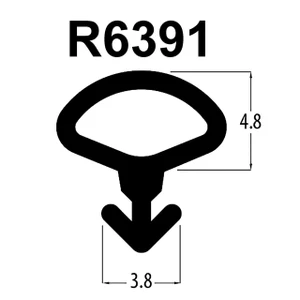 Bubble gasketsRounded compression seals
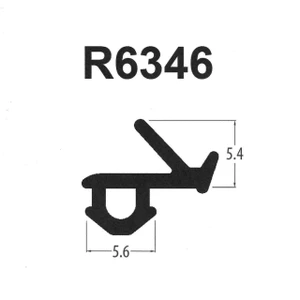 Flipper gasketsFin or lip weather seals
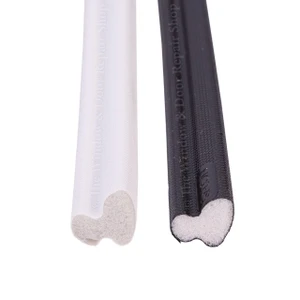 Q-Lon gasketsFoam weather seals
 Threshold door sealsSeals for door thresholds
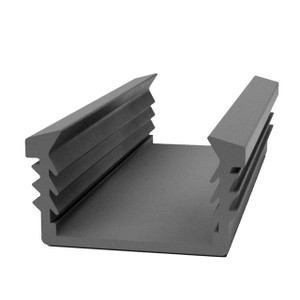 U-channel gasketsWrap-around patio door seals
Runs round the frame or the door and seals the gap when the door closes. Usually a bubble, flipper or Q-Lon seal. This is the one to change on a draughty uPVC or composite door.
Sits in the threshold under the door. If draughts or rain come in at the bottom, match the threshold make and code, such as Rio AM3 or MXS, with our threshold door seals.
Sliding patio doors often use a U-channel gasket that wraps round the edge of the glass. Bifold doors use seals made for their own system, so choose by profile: see our bifold door gaskets.
Measure round the frame and add a little extra for the corners and trimming. Our seals are sold per metre.
Open the door, find the end or joint of the old seal and pull it out of its groove all the way round. Clean the groove, then push the new seal in, starting at the top corner and working round without stretching it. Close the door to check it seals evenly before trimming the end.
If the seal is new but the door still lets in air, the door may not be pulling tight against it. Worn hinges or a door that has dropped are common causes: see our uPVC door hinges. For gaps the frame seal cannot close, see our draught excluders and weather bars.
A bubble seal has a rounded section that compresses when the door closes. A flipper seal has a flexible fin or lip. Q-Lon seals use a compressible foam core and are found on many composite and timber doors. They are not automatically interchangeable: replace like with like.
If two profiles look similar, test before you buy: we have sample packs for bubble, flipper and U-channel gaskets.
Yes, most push-in door seals can be fitted without special tools once you have the right profile. The old seal pulls out of the groove and the new one pushes into the same channel.
Yes. Many composite doors use push-in bubble, flipper or Q-Lon seals. Match the profile of your old seal.
Yes. See our door thresholds.
Fire doors need seals that suit the door and its fire rating. See our intumescent seals and check the door manufacturer's requirements first.
Also see our uPVC window seals and all gaskets and seals.
Not sure which seal you need? Send us a photo of the seal, including the cut end, and we'll match it.
Send us a photo to identify your partMonday to Friday, 8:30–12:30 and 13:00–15:30