FREE TRACKED UK DELIVERY | ORDER BY 2PM MON–FRI | EXPERT HELP: 01209 200564
FREE TRACKED UK DELIVERY | ORDER BY 2PM MON–FRI | EXPERT HELP: 01209 200564
Handle won't lift, key won't turn fully, or the door won't lock? On most uPVC, composite and double glazed doors the fault is in the locking mechanism inside the edge of the door, and very often just its centre gearbox. We stock replacement door locks for front and back doors, including complete multipoint locks, gearboxes, door keeps and latches, sashlocks and garage door locks from Yale, ERA, Mila, Fuhr, GU, Winkhaus, Avocet, Fullex, Saracen and Maco.
A uPVC door lock replacement is usually a like-for-like swap you can do yourself. Identify the type, take the measurements in the guide below, and match them before you order.
 Multipoint door locksComplete locks with hooks, rollers or bolts
  Gearboxes & lockcasesReplace just the centre case
  Door keeps & latchesKeeps and striker plates for the frame
  Sashlocks & mortice locksFor timber doors
 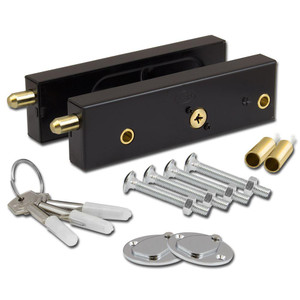 Garage & roller shutter locksSecurity bolts and locks
Most uPVC and composite doors use a multipoint lock: the long metal strip fitted into the edge of the door. French doors use one on the main door, with shootbolts locking the second door at the top and bottom. In the middle is the gearbox (also called the centre case or lockcase), which holds the latch and deadbolt and is operated by the handle and the key cylinder. Above and below it are extra locking points, such as hooks, rollers, deadbolts or pins, which engage keeps on the door frame when the door is locked.
If the strip, hooks and rollers are in good condition and the fault is in the middle (the handle won't lift or drops, the latch sticks or the key won't turn fully), a replacement gearbox is often all you need and is the cheaper repair. If the strip is bent, the locking points are worn or broken, or no matching gearbox exists, replace the complete multipoint door lock.
From the edge of the faceplate to the centre of the keyhole. 35mm is the most common on uPVC doors, followed by 45mm; 25mm, 28mm and 30mm are also used.
From the centre of the handle spindle to the centre of the keyhole. 92mm is by far the most common; 62mm, 68mm and 70mm are also used.
Measure the width of the metal strip on the edge of the door, usually 16mm or 20mm, and its overall length from end to end.
Note the type of each locking point (hook, roller, deadbolt or pin) and measure its position from the centre of the spindle, so the new lock lines up with your existing keeps.
Single spindle: both handles work the latch together. Split spindle: the inside and outside handles work independently, so the door can't be opened from outside without the key. Some gearboxes have two spindle holes, so match the number and position.
Look for a brand name or part number on the faceplate or gearbox, such as Yale Lockmaster, ERA Vectis, Mila Coldseal, Fuhr, GU Ferco or Winkhaus. Gearboxes must match the brand and model of the lock strip.
Tip: take the old lock out before ordering if you can. Measuring the lock itself is far more reliable than measuring the door, and you can photograph the markings on the gearbox.
Not every door problem is the lock. If the key is stiff, snaps or won't go in, the problem is usually the door cylinder (the barrel the key goes into). If the handle droops or feels loose but the door still locks, the springs in the door handle may have failed. If the door only locks when you push or pull hard, the hooks may be catching the door keeps, which can often be adjusted or replaced. Looking for a patio door lock replacement? Sliding patio door locks and handles are in our patio door hardware range.
Timber front and back doors often use a mortice sashlock (a lock and latch in one case) instead of a multipoint lock. Measure the case depth, backset and the distance between the handle spindle and the keyhole. For garages and roller shutters, our garage door locks include security bolts and keyed-alike sets.
Usually, yes. With the door open, remove the handles and cylinder, take out the screws along the faceplate and slide the old lock out of the edge of the door. Fit the new lock the same way round. The new lock or gearbox must match the backset, centres, faceplate and locking-point positions of the old one.
The most common causes are a failed gearbox, a door that has dropped so the hooks no longer meet the keeps, or a worn cylinder. If the handle lifts freely without throwing the hooks, the gearbox has usually failed. If the hooks catch the keeps, the door or keeps need adjusting.
No. Multipoint locks vary in backset, centres, faceplate width and length, and in the type and position of the locking points. Match all of these, or replace just the gearbox if your strip is in good condition.
Usually not. Most composite doors use the same kinds of multipoint lock and gearbox as uPVC doors, so you measure and match them in exactly the same way: backset, centres, faceplate and the position of the locking points.
Replacing just the gearbox is usually the cheaper repair, because the strip and locking points stay in the door. It only works if the rest of the lock is in good condition and a matching gearbox is available for your lock.
Not if you replace the lock like-for-like and the existing keeps are in good condition. If you change to a lock with different locking points, the keeps on the frame must match the new lock.
Send us photos of the faceplate, the gearbox and any markings, with a tape measure in shot, through our part identification service and we will help you find a match.
Not sure which door lock you have? Send us a photo of the faceplate through our part identification page and we'll match it for you.
Send us a photo to identify your partMonday to Friday, 8:30–12:30 and 13:00–15:30