Door dropped, catching on the frame or hard to lock? Worn or loose hinges are a common cause. We stock replacement door hinges for uPVC and composite doors, including front, back and French doors: flag hinges, butt hinges, composite door hinges, 3D adjustable designs and selected hinge packers from Avocet, ERA, Mila, Yale, Trojan and more.
Door hinges are often specific to a profile or original system. Compare the hinge type, body dimensions, fixing positions, rebate shape and adjustment method with the existing hinge before ordering.
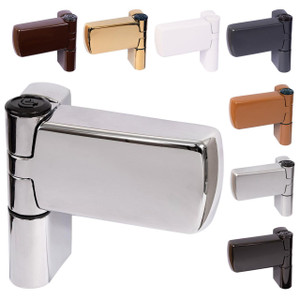 Flag door hingesThe most common hinge on uPVC doors
 Butt door hingesFlat, angled or rebated designs
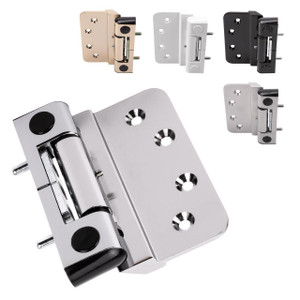 Composite door hingesHeavy-duty hinges for composite doors
Flag hinges are widely used on uPVC doors and normally provide adjustment in more than one direction. Butt hinges sit closer to the door edge and may use flat, angled or rebated designs. Composite doors can use dedicated heavy-duty or 3D-adjustable hinges, so the door material alone does not identify the correct replacement.
Identify whether the existing hinge is a flag, butt, rebated or composite-door design.
Compare the height, width, projection and profile of both hinge sections.
Check the screw pattern and the relationship between the sash and frame fixing points.
Note whether the fitted face is flat, angled or rebated.
Check how the hinge adjusts for height, compression and lateral alignment.
Count the hinges fitted to the door and check whether the listing is for an individual hinge or a pack.
Tip: photograph the hinge open and closed, including the sash and frame sections, before you remove anything. It makes matching the replacement far easier.
Adjustment may correct minor dropping or alignment problems where the hinge is undamaged. Most flag and 3D hinges adjust with an Allen key for height, side-to-side position and compression; the adjustment screws are usually under a cover cap, and the exact method varies by model. Replace hinges that are cracked, badly worn, seized or no longer hold adjustment. Hinge packers are available for selected systems, but they are not universal.
The range includes Avocet Triad and WMS, ERA Nexus, Maxim and Challenger, Mila Ideal and Evolution, Yale Neon, Trojan Patriot Plus, Schuring, Simonswerk and Fab & Fix. Model names can help identification, but dimensions and profile compatibility remain essential.
No. Hinges differ by profile, size, fixing pattern, rebate and adjustment system.
Hinged uPVC French and patio doors often use the same flag or butt hinges as front doors, but match the type, size and fixing pattern of your existing hinge. Sliding patio doors don't use hinges; see our patio door hardware for rollers.
It may be possible when an exact matching hinge is available and the others remain serviceable. Mixing different hinge geometries can affect alignment and load sharing.
A 3D hinge provides adjustment across three directions, commonly height, lateral position and compression. The precise adjustment method varies by model.
Photograph the hinge open and closed, include the sash and frame sections, and record the overall dimensions and fixing pattern. Then send the photos through our part identification service.
Not sure which door hinge you have? Send us clear photos and measurements through our part identification page and we'll match it for you. Hinges can't be identified reliably from a phone description alone.
Send us a photo to identify your partMonday to Friday, 8:30–12:30 and 13:00–15:30